Elaphiti Islands Guide: Koločep, Lopud & Šipan
21 October 2024 · 4 min read · Group Boat Tours Dubrovnik · Last updated: 15 March 2026
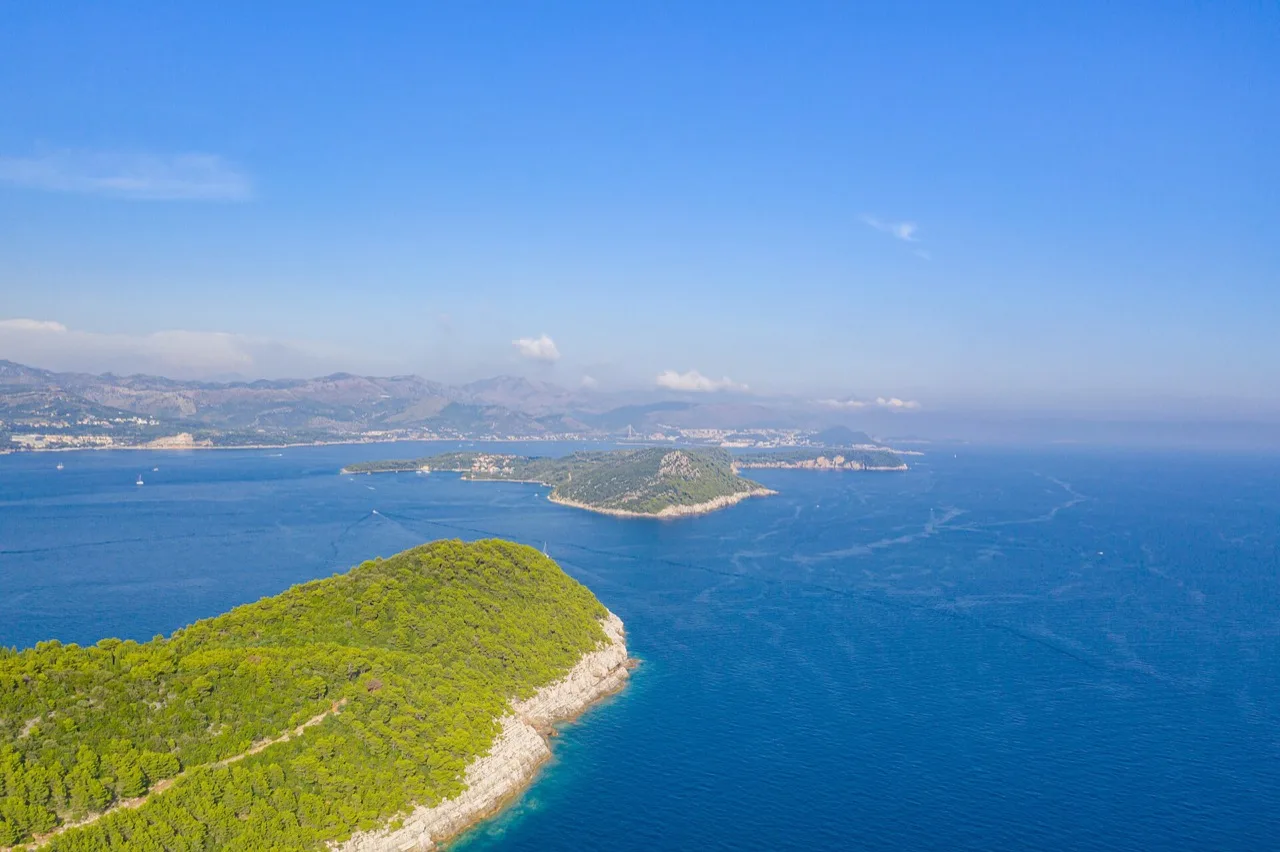
Strung out just northwest of Dubrovnik, the Elaphiti Islands are the easiest escape from the city walls — close enough to reach in twenty minutes, quiet enough to feel a world away. The name comes from the Greek for “deer”, and while the herds are long gone, the pine-covered slopes, hidden coves and sleepy stone harbours remain. Three of the islands are inhabited, and each has its own character: car-free Koločep with its sea caves, beach-blessed Lopud, and big, green Šipan with its konobas and vineyards. Here’s what to see on each, where to swim, and how to string them together by boat.
Koločep — the car-free cave island
Koločep (locals call it Kalamota) is the closest of the Elaphiti Islands to Dubrovnik and the smallest of the three inhabited ones. There are no cars here at all — just a handful of footpaths winding between two tiny villages, Donje Čelo and Gornje Čelo, divided by a band of pine forest and olive groves.
The island’s headline attraction sits below the waterline. The Blue Cave on Koločep’s southern shore is a low sea cave where light reflects off the pale seabed and glows an electric blue. It’s only reachable from the water and then a short swim, which is exactly why it pairs so well with a boat trip. If the cave is your main goal, the Blue Cave & Elaphiti Islands boat tour is built around it.
For swimming, Donje Čelo has a gentle pebble-and-sand bay that’s calm enough for families, while the rockier coves towards the cave reward snorkellers with clear water and the occasional shoal of fish. Bring water shoes if your feet are tender on stones.
Lopud — sandy Šunj and a green interior
Lopud is the middle island and, for many visitors, the favourite. Like Koločep it is entirely car-free, so the seafront promenade in Lopud town is a string of cafés, palms and old captains’ houses with nothing louder than a passing bicycle.
The big draw is Šunj beach on the island’s far side — a rare proper sandy beach in a region of pebble coves. The bay shelves so gently you can wade out a long way, which makes it ideal for children and anyone who prefers warm shallows to a sudden drop-off. It’s a fifteen-minute walk over the spine of the island from the harbour, or a short golf-buggy ride; either way the reward is soft sand and shallow, bath-warm water.
Beyond the beach, Lopud rewards a wander. There’s a ruined Franciscan monastery above the harbour, the hilltop fortress of Sutvrač for views back towards Dubrovnik, and quiet lanes lined with bougainvillea. Pack a hat — the inland paths offer little shade in high summer.
Šipan — the biggest and quietest
Šipan is the largest of the Elaphiti Islands and, fittingly, the most spread out. Two villages bookend it: Suđurađ in the south-east and Šipanska Luka in the north-west, linked by the island’s one valley road through olive groves, vineyards and orchards — the so-called “valley of olives”.
This is the island for slowing down. Both harbours are wonderfully sleepy, lined with konobas (family taverns) serving grilled fish, local wine and olive oil pressed a few fields away. Suđurađ has a pair of fortified Renaissance summer houses built by Dubrovnik nobles, a reminder of how prized these islands were as country retreats.
Swimming on Šipan tends to be in calm, sheltered inlets rather than on big beaches — perfect for a quiet dip off the boat before lunch. Because it sits furthest from Dubrovnik, Šipan stays peaceful even in peak season, which is part of its charm.
How to visit the Elaphiti Islands by boat
There are scheduled ferries, but they run to a timetable that rarely matches the rhythm of a good island day — and they skip the Blue Cave entirely, since it’s only reachable by small boat. A shared group tour solves both problems: you swim where the ferries can’t go, and you let an English-speaking local skipper handle the navigation.
For the full sweep of all three islands plus swim and lunch stops, the full-day Elaphiti Islands boat tour is the natural choice; it gives you time on Lopud and Šipan as well as the cave at Koločep. Shorter on time? The half-day option focuses on Koločep and nearby swim stops. Either way you’ll travel in a small group of no more than twelve, with snorkelling gear, drinking water and harbour fees included.
The season runs from April to October with daily morning and afternoon departures from Gruž harbour. When you’ve decided which islands you most want to see, check availability and book your seats — and bring a mask, because the water out here is some of the clearest you’ll find anywhere near Dubrovnik.
Sources & useful links
Frequently asked questions
How many Elaphiti Islands can you visit in a day?
A half-day trip usually covers Koločep and a couple of swim stops, while a full day reaches all three main islands — Koločep, Lopud and Šipan. Only Koločep, Lopud and Šipan are inhabited; the rest are uninhabited islets you sail past.
Do you need a car on the Elaphiti Islands?
No — Koločep and Lopud are completely car-free, and Šipan has only a couple of quiet roads. You explore on foot, and the easiest way to reach the islands at all is by boat from Dubrovnik.